Cover Stories
LITTLE JOE Y LA FAMILIA IN CONCERT AT AQUARIUS
Tuesday, September 9, 2008 4:25 PM PDT
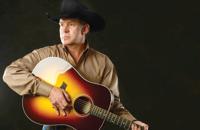
With over 40 years in show business, Little Joe Y La Familia has been one of the most popular Tex-Mex bands in the music industry. And “Little Joe” himself has been described as the “King of the Brown Sound”-a musical pioneer who helped define “Tejano” music, that mix of traditional Mexican “norteņo” music with American country, blues and rock styles. Even with three Grammy wins under his belt, he's still under the radar in mainstream music. To his fans, however, Little Joe continues to loom large.
“Little Joe,” aka Jose Maria DeLeon Hernandez, was born “dirt poor”...literally, in a three-wall dirt-floor car garage in Temple, Texas, on October 17,1940. When he received $5 for playing his first paid musical gig at age 15, he knew where his future would lie; he knew picking a guitar was better than picking cotton.
Joe would make his recording debut as a guitarist for Terro Records in 1958, in Corpus Christi, Texas, on an instrumental single “Safari part 1 and 2”. In 1959, he formed Little Joe & The Latinaires.
In the '60s, he recorded with several companies but ventured into his own independent label-Buena Suerte Records for Spanish recordings-and Good luck Records for his English records. Soon he formed Leona Records in Corpus Christi, Texas, which would keep Joe independent through the '70s and '80s.
In the ‘90s, Little Joe Y La Familia (he changed the group to that name in the mid-70s), earned three Grammy nominations and one Grammy award (for Dies y Seis De Septiembre) in the Best Mexican-American Performance Category. He recently received his third Grammy for a tribute project to Freddy Fender called Before the Next Teardrop Falls.
The Laughlin entertainer recently talked with Little Joe about his career, his music and the show he's bringing to the Aquarius Outdoor Amphitheater at the Aquarius Casino Resort, Saturday, September 13.
Q. In checking out your website-it looks like you've been busy.
A. Thank God for that. I'm in the studio as we speak putting the final touches on two CD covers-I produced two CDs last month. I wanted to have them ready in time for the Grammys and I was given the deadline of September 2. I needed to have them ready by then and I'm glad I was able to do that. I'm real happy with the outcome.
I keep telling myself I'm going to start early on recording projects-like in February or March-but it never happens. The tribute I did to Freddy Fender last year that went on to the Grammys was the same thing-I produced it in five days. I promised I wouldn't do that again. Well I did.
The two new CDs are completely different-one's in the country genre category, the other one is for the Tejano category and is a tribute to Sunny Ozuna. They each have a real groovy rhythm and I'm so pleased with both of them.
For the country album, I went back to the early days of my career and kicked off the album with three songs by Hank Williams-but I did them with a Latin rhythm. I had researched his music and saw that no one had ever done that and I had in my mind doing some of his songs that way -it worked out just beautifully.
For the Sunny Ozuna CD, I recorded six songs Sunny actually wrote. I wanted to be sure to cover his song “Talk to Me.”
He was on “American Bandstand” in 1963. How proud I was to see a ‘Chicanito' on “American Bandstand” with Dick Clark. It gave me hope and inspiration to succeed and do something with music. He overcame racial barriers there. I have nothing but respect and admiration for Sunny. As kids we were competitive. We would try to outdo each other-and it kept us both working harder and sharper.
Q. Sounds like good times, both being competing musicians, yet friends.
A. I wish more groups and artists today had more respect and camaraderie for each other than they do. Ego don't pay the rent. It don't even pay for breakfast tacos. I set my ego aside when I ask how much am I getting paid. When we got paid $5 and all the beer we could drink, that was a great night-and we're talking 1998. (Just kidding). But back when we were starting, $5 and all the beer we could drink was like a buffet for Little Joe and the Latinaires. The club lost out. They were surprised how much beer we could drink-we were only four skinny little kids.
Q. Did you record a whole album of Freddy Fender music? We couldn't find a discography or track listing online.
A. It was just the one song. I've been doing the Freddy Fender tribute during my live performances and I get great response from that song so I decided to record it. That's what made me want to record a tribute to Sunny-to do so while he was alive and well.
I was on the radio this morning premiering the Sunny Ozuna CD and I got a chance to talk with him on the phone on the air. Some people called in while we were on the radio-it was simulcast all over Texas-and they were surprised-they thought he had passed away.
Q. Mexican-American music - Tejano music. What's the difference and can you describe your style for those who are not familiar?
A. The Grammys continue to change the name of the genre, which adds to the confusion. When I started, it was always Mexican-American, Chicano, bilingual. Tejano is accordion-based, one style. My music is a mix of rancheras, jazz, rock, country. What I do doesn't apply specifically to Tejano. I apply that mix, but what I do is a little different. It's Mexican and it's Tejano.
I've always had a horn-based group. I go from using two horns to six or seven horns. But years ago, the record labels came in and changed the music-and they continue to change it. It depends on the trend and what sells the most. Whatever they call it, it's what I've been performing the last 45 years.
Q. Who were your influences?
A. There were so many. I was born and raised in a totally black neighborhood. I think there was one other family other than ours that wasn't black. The first music I heard was in the little bars around the neighborhood, which was not music that was on the airwaves. I listened to black artists and jukeboxes.
What I did hear on the radio was country music. My older brothers and sisters brought home swing era music, big band, jazz...that was a big influence. My dad and his brothers and sisters were musicians so there was always a party atmosphere at my parents' house. They played their brand of music-music I would later record. Of course, the different fads of music came and went. I tossed all of that into the salad for a different kind of music. It's boring to play one style.
Q. Who came on the music scene first: you or Freddy Fender?
A. Freddy was a couple years older than I and we probably started our careers at what seemed like a magic number back in the old days-on or around the age of 15. Fender did the same thing before me and became a world recording star.
We talked about working together and doing some recordings together, but we had ‘maņana' syndrome. We never got around to doing it.
Q. Freddy Fender used to joke about the horrible places he used to play-places where at the end of the night they swept up the body parts along with the sawdust and spilled beer. Did you ever work in places like that?
A. I still do. In my case they leave the chicken wire off the stage area so I tell them when they throw bottles to make sure they're not empty. Even if it's half full, it's better than empty.
I guess I'm lucky to go through those places. It makes you appreciate places like Laughlin, where people walk up and hand you a shot of tequila instead of throwing it at you.
But those rough experiences are good. How else do you know the difference between good and bad, easy times and hard times? I come from the Depression era. I learned to appreciate early on anything and everything. But most importantly I learned to appreciate friendships. I have been lucky to have great friendships-that's what has made me who I am and whatever I am.
Q. What does it feel like to win this latest Grammy? Is it better than winning the first one?
A. Actually this is the third one. It's just as exciting and appreciated.
But the first one is very, very special. I dedicated it to the memory of my little brother who was responsible for making me follow a career in music. It was his idea, his wish, his inspiration. He was the real talent in the band. He never liked the spotlight. We didn't know about Grammys in those days. He made me vow to stay in music and take it to the top, whatever the top means. I always carried that promise with me. One of my older brothers told me winning a Grammy is the highest award you can receive from your peers and the industry and that I had kept my promise to my brother. It made me feel really good.
Q. Who do you think contributed to the overall music scene but didn't get the notoriety they deserved?
A. There are so many. I said it back then at the first Grammy. It reminded me how lucky I am because so many guys before me-and still going-deserve this more than I do. I am fortunate and lucky that I got one.
One guy who deserves credit in the music industry is Little Richard-he has never gotten a Grammy. How is that possible? It's politics, unfortunately. He's an innovator and creator of rock and roll-he's Mr. Rock and Roll-good God!
Q. What's in store this trip?
A. More fun. We'll play some of the new material from the new recordings. I write songs and I use live audiences to get their feedback. If they're humming or singing the lyrics, I'm thinking, ‘wow,' we're barely an hour into the show and people are so damn happy. They think they know the song they'd never heard before'.
We were really grateful for the sold out house the last time we were there and we're looking forward to another one. The venue is great. Laughlin is a beautiful big little gambling town. Bring your quarters and dancing shoes. I know this is a sit-down concert, but I saw people dancing in the bleachers last time. We were very pleased with the management and the hospitality last time.
Q. Who's in your band?
A. I'll have the same group-Sam Jones on percussion and vocals; Jesse Lopez on drums and vocals; Tom Cruz is on guitar; Frank Cagical and Jesus Gaitan are also on guitar. But I'll have two new trumpet players fresh out of college in my horn section-John Ontiveros and Gracie Acosta .They're good kids, they have no bad habits-but I shall take care of that.
LITTLE JOE
Y LA FAMILIA
Saturday, September 13
at 8 p.m.
Aquarius Pavilion
at the
AQUARIUS
CASINO RESORT
Tickets are $30/$40, buy one ticket, get one free for locals who present their A.C.E. Rewards Club card at the time of purchase
For tickets, see the box office on the main casino floor
or call
1-800-435-8469 |